

20/05/2026
News
Why joined‑up working matters for children with a parent in prison
By Tina Kikta, Service Manager
Since Anna’s* dad went to prison, she’s been scared to go to school. Her fear has become so overwhelming that she has stopped going at all. No one understands what’s going on. Her family doesn’t know how to help. The school is concerned but unsure what to do. Her social worker is struggling to understand what’s driving Anna’s distress. And staff at the prison have no idea that any of this is happening.
Supporting children and families affected by imprisonment cannot be done by any one organisation alone. The most effective support happens when prisons, community professionals and families work together, sharing information, understanding and responsibility.
Pact’s role is to help make those connections—to bring together people and systems that too often operate in isolation.
When collaboration works well, it prevents people in prison, children and families from falling through the gaps between services and opens up support that would otherwise not be possible.
Connecting prisons and social workers
Social workers play a critical role in supporting children affected by parental imprisonment. Where families are known to social services, social workers may be responsible for arranging and overseeing contact with a parent in custody and for making decisions that shape a family’s future after release.
However, prisons can be unfamiliar environments, and navigating systems across agencies can be complex. This is where Pact helps bridge the gap.
We work alongside social workers and prison staff to provide guidance, practical support and clear lines of communication, helping to keep children’s needs at the centre. At HMP Foston Hall, for example, we work closely with social workers to support visits in the Family Bonding Unit, particularly where there has been a long gap in contact or where a final visit is taking place ahead of adoption. These visits require sensitive planning and strong collaboration to get right.
A specific need in women’s prisons
While collaboration with social workers is vital across the prison estate, women’s prisons face particular challenges. As 95% of children whose mothers go to prison leave the family home, many women require sustained involvement with social services throughout their sentence and on release.
Pact currently provides dedicated social workers in two women’s prisons, and independent evaluation has shown this model to be highly successful. Embedding a social worker within the prison strengthens collaboration with local authorities, improves safeguarding, and ensures children’s needs are considered consistently—not only at moments of crisis.
For this reason, Pact is calling for a dedicated social worker in every women’s prison.
Education forums: building shared understanding
In the Midlands, generous funding from Sony has enabled Pact to deliver education forums bringing together social workers, Family Hub practitioners, Early Help teams, teachers, school leaders and pastoral staff.
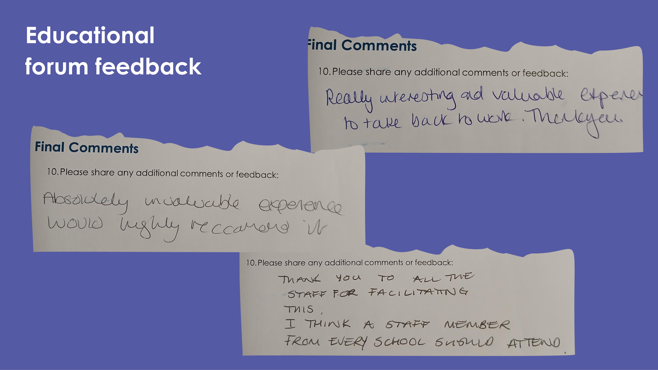
The forums help professionals understand the impact of parental imprisonment on children and their role in supporting them. This is particularly important for schools, which are often a key source of stability for children like Anna but may not be aware of what a child is experiencing or how best to respond.
During the sessions, we explore the emotional and financial impact of imprisonment, including stigma and long‑term consequences for children. Participants hear from colleagues across prison departments and take part in a “through the eyes of the child” walkthrough, experiencing the prison entry process as a child would. Many say this fundamentally changes how they support children and families.
One attendee, Rebecca Reeve from West Northamptonshire Family Hub, shared:
“Thank you so much for this morning. It was an experience I will never forget, and it gave me lots to think about too.”
When working together changes outcomes
After one of our forums, a professional contacted Pact about Anna. I joined a multi‑agency meeting to explore how we could support the family.
We organised a supported prison visit, to allow Pact and prison staff to explain prison life and security in an age‑appropriate way. The visit aimed to help Anna to understand what was happening inside the prison, and to allow the professionals around her to respond better to her fears – allowing her to return to school and rebuild her life.
That outcome was only possible because the prison, community professionals and Anna’s family were supported to work together.
When collaboration works, children feel safer, families feel heard, and professionals are better equipped to do their jobs. Pact’s role is to help make those connections happen—so that children like Anna don’t face these challenges alone.
*Name changed.
This blog is the first in a series highlighting our educational and family forums in the Midlands. These forums help to connect people across the prison system and community, with a view to better outcomes for all. With huge thanks to Sony for their generous funding of this project.
Read the other blogs: